

The right French press coffee ratio is the difference between a rich, sweet cup and one that is bitter or watery. Start with 1 gram of coffee for every 15 grams of water, then adjust to taste. Here are exact numbers, a simple method and fixes for the usual problems.
The ratio to start with
A ratio of 1:15 (1 part coffee to 15 parts water by weight) gives a balanced cup. Want it stronger? Go to 1:12. Prefer it lighter? Try 1:17. Because 1 gram of water is 1 milliliter, the math is easy.
How much coffee for your press
- 1 mug (about 300 ml): 20 g coffee
- 2 mugs (about 600 ml): 40 g coffee
- A full 34 oz press (about 1,000 ml): 65 g coffee
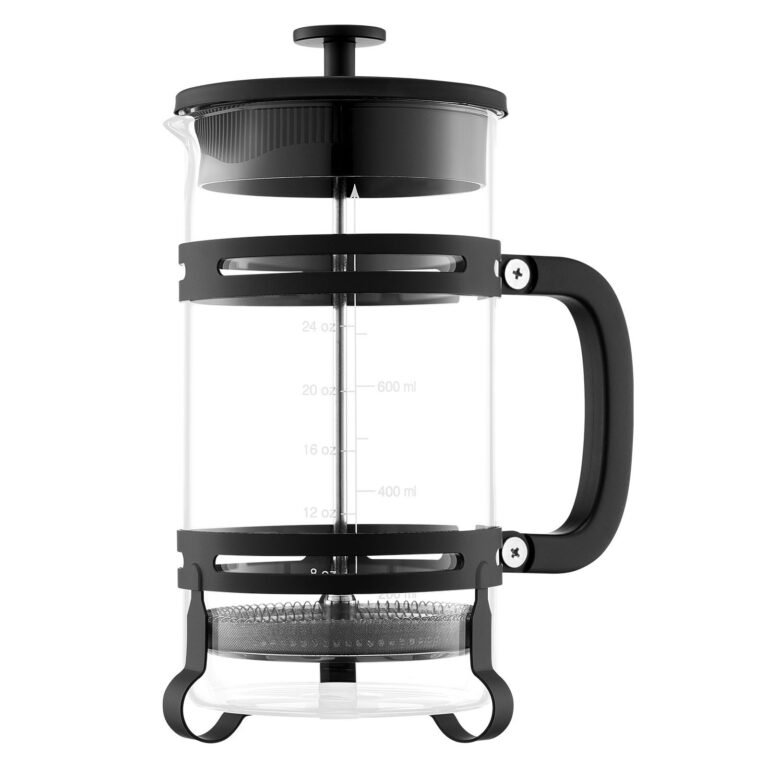
No scale? A rough shortcut is one level tablespoon of ground coffee per 100 ml of water, but weighing is far more consistent. Our 34 oz borosilicate glass French press holds roughly a liter, so the 65 g line above fills it.
Step by step
- Grind your coffee coarse, about the size of coarse sea salt.
- Heat water to just off the boil, around 93 to 96 degrees C (200 to 205 degrees F). Waiting 30 to 45 seconds after boiling gets you there.
- Add the coffee, pour in all the water, and give it one gentle stir.
- Put the lid on with the plunger up and wait 4 minutes.
- Press down slowly and steadily.
- Pour everything out right away. Coffee left on the grounds keeps extracting and turns bitter.
Why the grind matters
A French press uses a metal mesh, so a fine grind slips through and over-extracts. A burr grinder gives the most even coarse grind. A hand grinder such as our hand crank coffee grinder is an affordable start, and you can compare all options in coffee grinders.
Fix your cup
- Bitter or harsh: grind coarser, shorten the steep to 3:30, or lower the water temperature slightly.
- Sour or weak: grind a touch finer, steep to 4:30, or use more coffee.
- Muddy with sediment: grind coarser, plunge gently, and leave the last sip in the cup.
French press versus other methods
A press leaves more oils and fine particles in the cup, giving a heavier body. If you prefer a cleaner, brighter cup, see our V60 pour-over guide or the comparison of paper and metal filters.
Scaling the recipe
The formula is simple: coffee in grams equals water in milliliters divided by 15. So 500 ml of water needs about 33 g of coffee, and 750 ml needs about 50 g. For a stronger cup divide by 12 instead.
Choose the right beans
Medium to dark roasts do well in a press, bringing out chocolate, nut and caramel notes. Lighter roasts can taste lemony and thin unless you steep a little longer and use hotter water. Whatever you pick, grind just before brewing.
Common mistakes
- Using water straight off a rolling boil
- Grinding too fine
- Leaving the coffee in the press after plunging
- Skipping the stir, which leaves dry pockets of coffee
- Not cleaning the mesh screen
For a cleaner cup
After pressing, pour the coffee through a paper filter, or let it settle for a minute and pour slowly. This removes most of the fine sediment while keeping the body.
Making iced French press
Brew at a stronger ratio of about 1:10, press, and pour it over the same weight of ice. You get a bold iced coffee without watering it down. For a smoother, lower-acid result, try our cold brew guide.
Cleaning your press
Do not rinse grounds down the sink. Scoop them into the trash or compost, then take the plunger apart, wash each piece in warm soapy water and dry it. Coffee oils left in the mesh turn rancid and taint the next brew.
FAQ
How long should I steep a French press?
Four minutes is the standard starting point.
What water temperature is best?
Just off the boil, about 93 to 96 degrees C.
Can I use pre-ground coffee?
Yes, but pick a coarse grind and use it fresh.
Why is my French press coffee gritty?
The grind is too fine or the plunge was too fast.




One Comment